
Just like Harry Potter spent his childhood years in the cupboard under the stairs, hidden from guests and cramped between dust and dirt, Muslims in Prague pray and contemplate in the underground of Europe’s most secular country. Although mosques and halal foods are more readily available than ever, Muslim life in Prague leaves room for improvement.
Prayer, gatherings, community, food – Islam is not just a hobby, it is an identity that is shared by roughly 10,000 Muslims across Czechia. Different experiences among young Muslim Czechs show that most of them struggle walking a tightrope between secular public life in Czechia and private Islamic observance at home.
“There are no prayer rooms in public spaces, let alone at school. Neither for Christians nor for other religions is space to worship. We talked to our professors, but so far, there hasn’t been any solution”, says Ayesha Iman, a student of Middle Eastern Studies and Arabic and Persian language at Charles University in Prague. Everyday, she engages in her five obligatory prayers, which she usually does at home.
Ayesha has not always been a religious person, “I was born in a Muslim family, and I saw them praying, but my community and my friends were Czech, so I wasn’t interested in practicing Islam”.
According to a 2021 poll on religiosity in the Czech Republic, conducted by the Czech Statistical Office, more than two thirds of Czechia’s population claim to have no religious beliefs. That does not only ramp up difficulties for Muslims to blend into the majority atheistic society, it also stirs up questions about identity among Muslims who want both – to follow their faith and to be part of society. “People always saw me as a foreigner. At some point, I was curious about the identity they saw in me, and that’s when I found my way back to Islam”, the daughter of Pakistani immigrants recalls.
Besides the 22 year old who lives close to the city center in Prague and has a short way home, her classmate Kamil Soltan, coming from a village near Liberec, located 90 kilometers north of Prague, struggles with lack of resources for Muslims. “I am looking for random places to pray. Corners of an empty classroom are always my go-to option. Another thing is the food. I turned into a part-time vegetarian since there is neither halal, nor kosher food at uni – the most prestigious uni in the country”, Kamil adds with indignation.
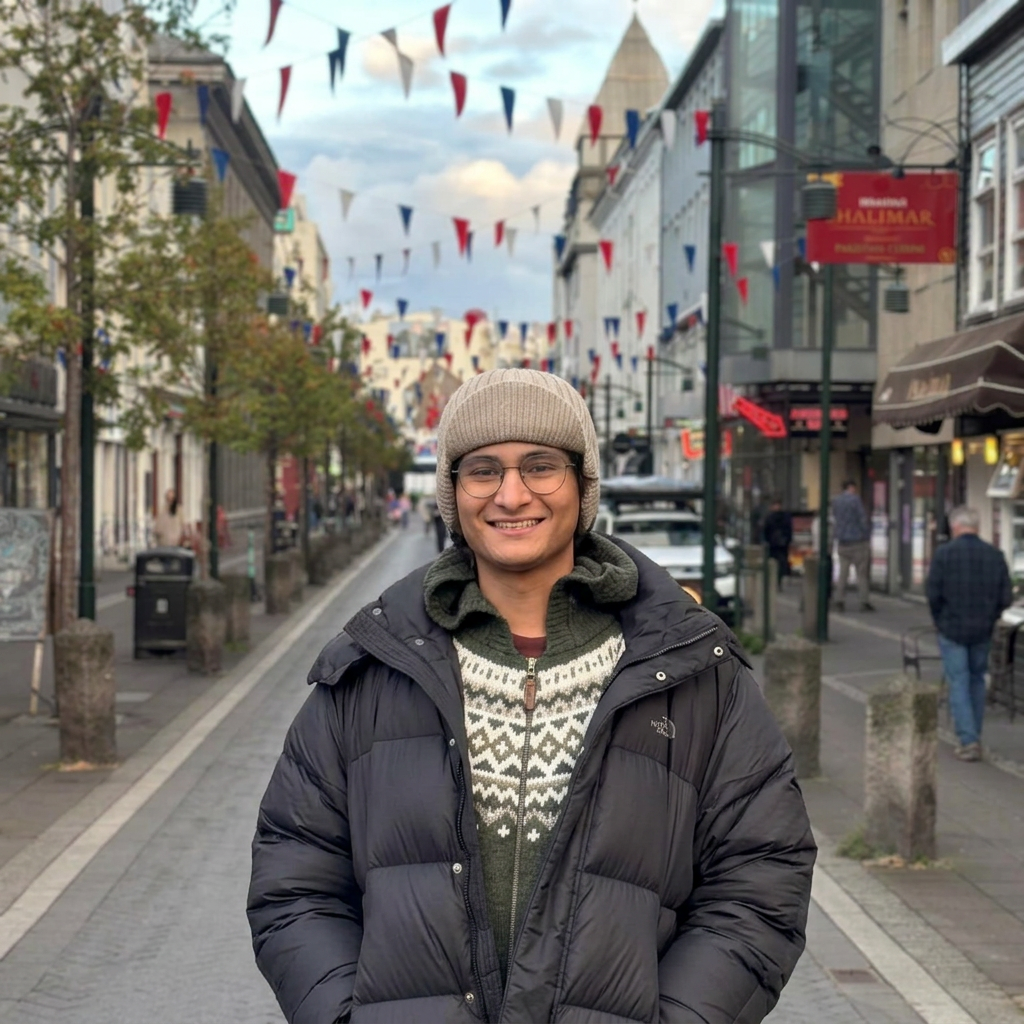
It is apparent that the 21 year old has become tired of the constant treasure hunt for an appropriate place to pray and to eat, “the most basic thing I wish for is a quiet room for my prayers, not a circulation area of faculty and students. Regarding getting halal foods, my family and I travel twice a month to the city center. In a local shop, we buy meat for the next two weeks, have our Friday prayer, and return. It always takes the whole day ”, he explains with a sigh.
Indeed, Charles University does not accommodate a ecumenical prayer room. Despite holding lectures about Christian, Muslim and Jewish religious traditions, students have been waiting hopelessly for a prayer area. Now, as the faculty of humanities building is about to be renovated, hopes among Muslim students are reignited, leaving room for the responsible people to demonstrate their commitment in tackling the issue.
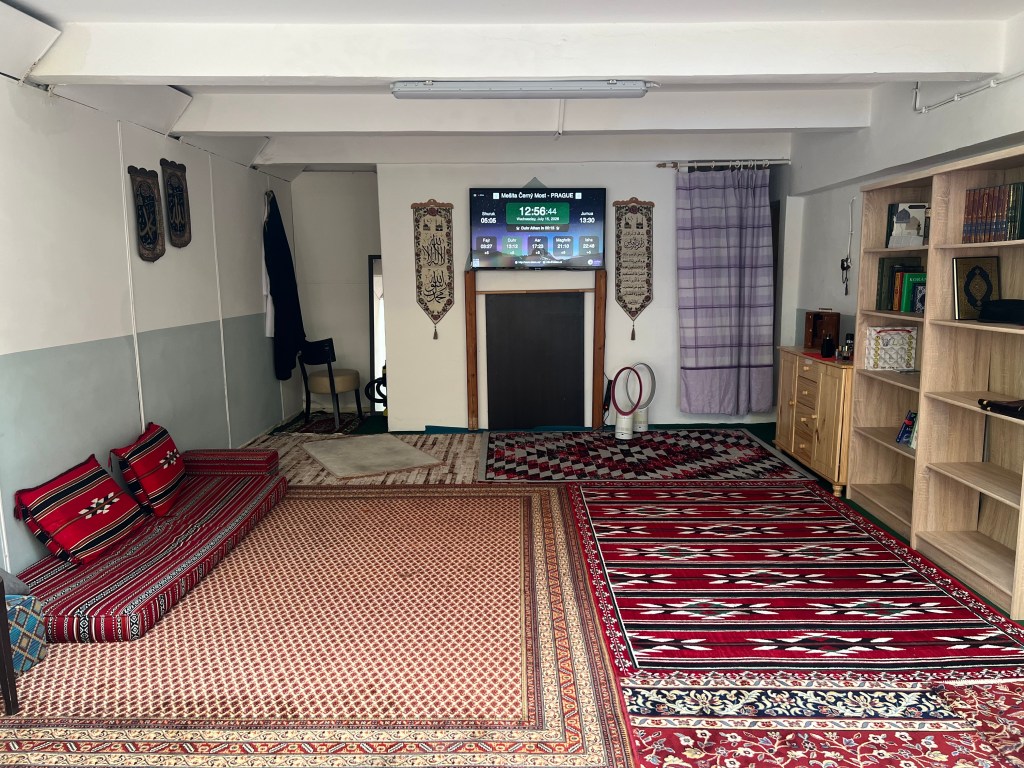
Nevertheless, the will and ambition of establishing a prayer room alone does not necessarily lead to its establishment. “Halal Meat” shop-owner Abdalla Elbournou explains, “I opened a local Musalla here a couple of years ago after the central mosque in Prague got shut down. As a result of neighbours’ complaints about Friday gatherings, real estate owners have become reluctant in providing space to the Muslim community in Prague”.
That anti Muslim sentiment has become more pervasive since the 2015 refugee crisis is one of the main reasons Muslims have to keep on praying in private areas.
Not having met her needs as a Muslim citizen, Asma, the 22 years daughter of Abdalla, decided to leave Prague for Türkiye where she has been pursuing her undergraduate studies in psychology since. “Of course we have prayer rooms at my uni. There are well maintained masjids everywhere you go; in malls, schools, universities, metro stations, and so on”. I am just relieved I don’t have to eat vegetarian anymore”.
Her father Abdalla has contributed greatly to make Prague meet the daily needs of Muslims in Prague. Besides the small Musalla that is accessible for anyone who wants to pray, he runs three shops across the Czech capital. Widely known under the name “Halal Meat”, they attract Muslims from all backgrounds. “I have customers from everywhere; Uzbekistan, Palestine, Syria, Pakistan and of course from Czechs”, he says proudly.
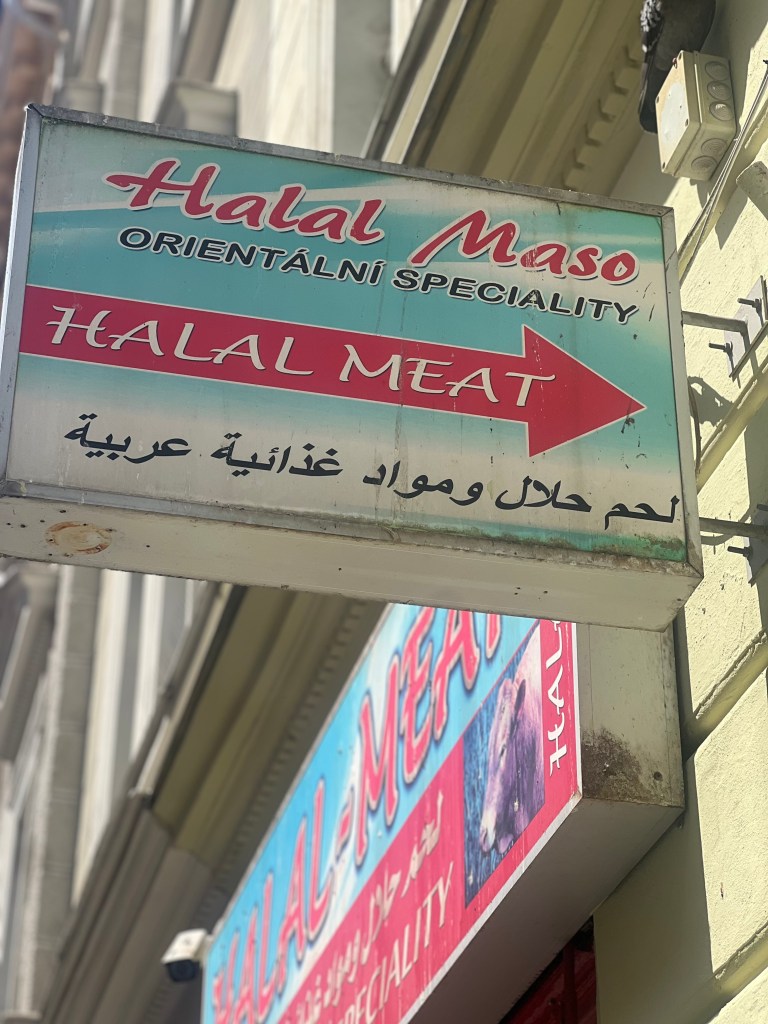
The oldest shop was established twenty years ago. After fewer and fewer mosques became available and Muslims were urged to travel far distances, Abdalla decided to open a small prayer space across the street from his shop. “Initially, we thought it’s only for employees, but more and more customers asked for a place to pray. Now, everyone in the area knows they can use it”.
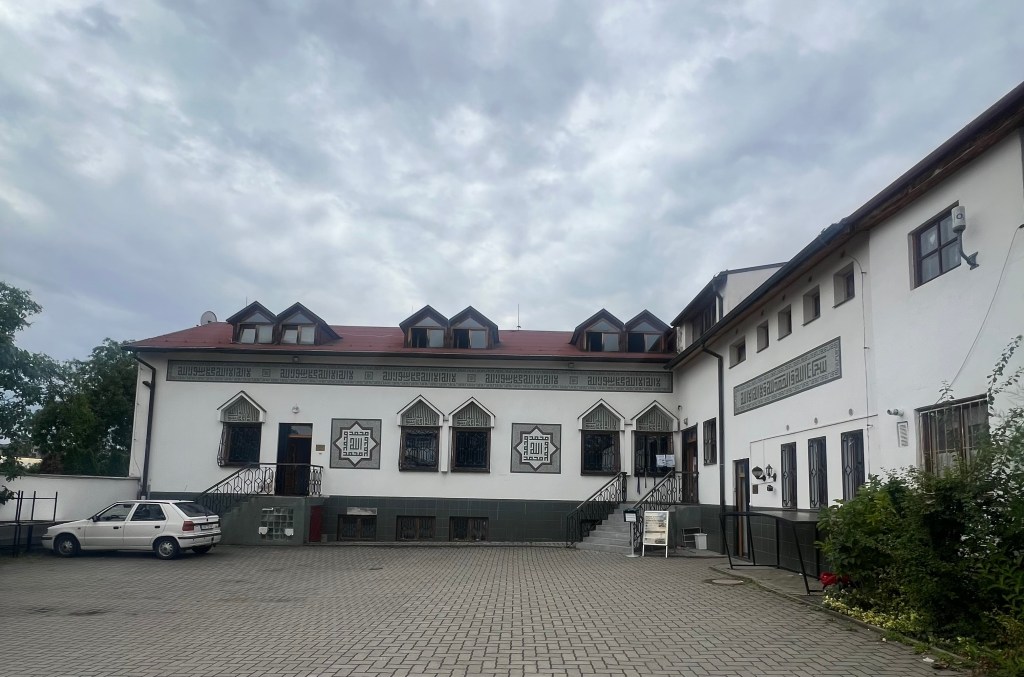
For Jummah prayer however, Mešita Černý Most remains one of the most popular mosques across Prague. “We always go there since it is one of the biggest communities there and we have established relations with the people”, Ayesha highlights.
With recitation and Arabic classes on the weekends, that are run by the Islamic Foundation in Prague, even the youngest Muslims in Prague receive education. An extensive abolition area and a Friday sermon, held in Czech, Arabic, and English language, makes it the center with the greatest capacity in accommodating large quantities of Muslims.
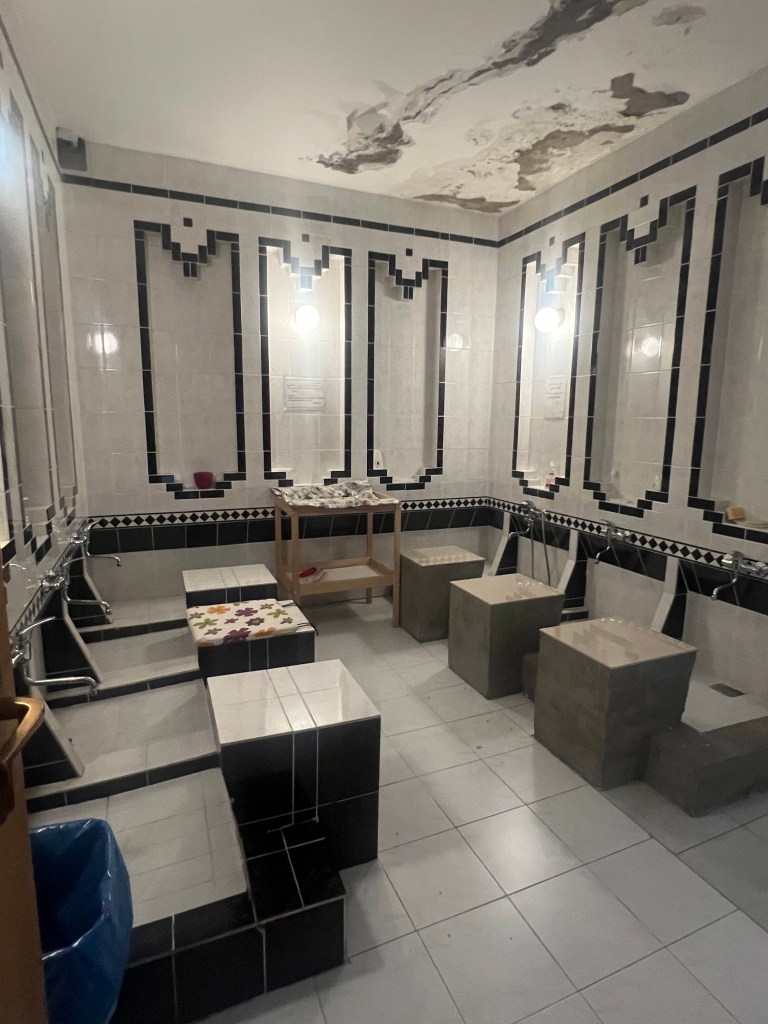
The Hidden Face of Daily Racism
‘Please don’t blow us up’ – a “joke” often heard by Kamil. “All my life growing up, I was confronted with jokes related to terrorism”, Kamil recounts.
That it is not only students who engage in everyday racism but teachers as well is evident in Kamil’s experience at a pre-grad school ball. “I was holding a glass of wine in my hand. Of course it was alcohol-free which was not apparent from the liquid. My teacher saw me, came over, and ‘joked’ Kamil recounts making air quotes and emulating his teacher’s drunk appearance, “well, Allah cannot see underneath the roof, can he?”.
Unlike Kamil’s experience, Ayesha often experiences racism from foreign people. She has been suffering from catching bad looks and sometimes verbal assaults. Because of that, she feels nervous all the time and tries to stay alert. “I always have to observe my surroundings, because I am afraid of attacks – verbal or physical ones”.
Both students have never experienced genuine aggression against them. They blame ignorance and alcohol for being the main drivers of racist interactions. “It happens from time to time that I’m offered alcohol, although I make clear I’m a Muslim. They can’t make the connection that Muslims don’t drink, especially in the countryside where my family lives”, Kamil concludes.
What needs to be done to liberate Muslims in Czechia from the burden of their underground life is probably the same that made Harry Potter get Dudley’s second bedroom in the first floor of his aunts’ house; pressure from an authority and magic.
In a country where the majority of the population does not believe in a deity, the process of finding an authority that cares about the needs of religious minorities might be a rocky path. Yet, examples of Germany show that Muslims can exert pressure themselves: Advocating for prayer rooms, claiming their rights for religious freedom, and showing up as a community has led to the establishment of prayer rooms at workplaces and universities.
At the Goethe University in Frankfurt for example, student and faculty initiatives led to the establishment of the “house of silence”.
Since its construction in 2010, it invites students of all religious traditions to engage in interreligious dialogue. Physically giving room for dialogue embodies a step towards education and interreligious understanding that, in a place where anti Muslim sentiment is growing, might be needed more than ever.


Leave a comment